What to write in a sympathy card
Say you are sorry, use the person’s name, and add one true thing: a memory, a quality, or simply that you are thinking of them. Two or three sentences is enough. The cards people keep are short and specific, not long and eloquent.

The shape of a good card
- Their name. “I was so sorry to hear about Margaret,” not “your loss”.
- One true thing. A memory, something they did, or how they made people feel.
- Something about now. That you are thinking of them, or one specific offer of help.
That is the whole card. If you did not know the person who died, the second line is about the person you are writing to instead.
Examples by situation
A colleague
I’m so sorry about your dad. Please don’t think about work for a moment longer than you need to — we’ve got things covered here.
We were all so sad to hear about Tom. Thinking of you and your family this week.
A neighbor
I’ll miss seeing Frank out with the roses every morning. He always had a wave for us. I’m so sorry.
We’re just across the street. I’ll bring dinner over on Thursday unless you tell me not to.
Someone you barely knew
I didn’t know your mother well, but I know how much she meant to you. I’m thinking of you.
I was so sorry to hear about Daniel. Sending you my deepest sympathy.
After a long illness
You looked after her so well for so long. I hope you know what a difference that made. I’m so sorry she’s gone.
Avoid “at least she’s not suffering anymore”. It may be true, and the family may say it themselves, but it is not yours to say.
After a sudden death
There are no words for something this sudden. I’m so sorry about James, and I’m here for whatever you need, now or later.
Do not ask how it happened, in the card or anywhere else. If they want to tell you, they will.
The loss of a parent
Your mom was the warmest person at every party. I still use her lemon cake recipe. Thinking of you all.
For gift ideas as well as the card, see what to send someone who has lost their mother and their father.
The loss of a husband, wife or partner
I keep thinking of the two of you at the lake every summer. I’m so sorry, Ann. I’ll call next week, and you don’t need to pick up.
A second card, months later
The cards stop arriving about two weeks after the funeral, which is roughly when the quiet begins. A note at three months, on their birthday or on the first holidays without them, is often the one remembered longest.
I’ve been thinking about you and about Paul, especially with Christmas coming. No need to reply. I just wanted you to know he’s not forgotten.
What to avoid
- “Everything happens for a reason” or “They’re in a better place”, unless you know the family shares that faith.
- “I know how you feel.” Even if you have been through something similar, this is about them.
- “Let me know if you need anything.” Kindly meant, but it asks an exhausted person to invent a job for you. Name one instead.
- Long stories about yourself, and anything about how the person died.
How to sign off
“With love”, “Thinking of you”, “With deepest sympathy” or simply your name. If the family might not place you, add how you knew the person: “Sarah Lee, from your dad’s bowling league”.
If you are sending a gift with the card
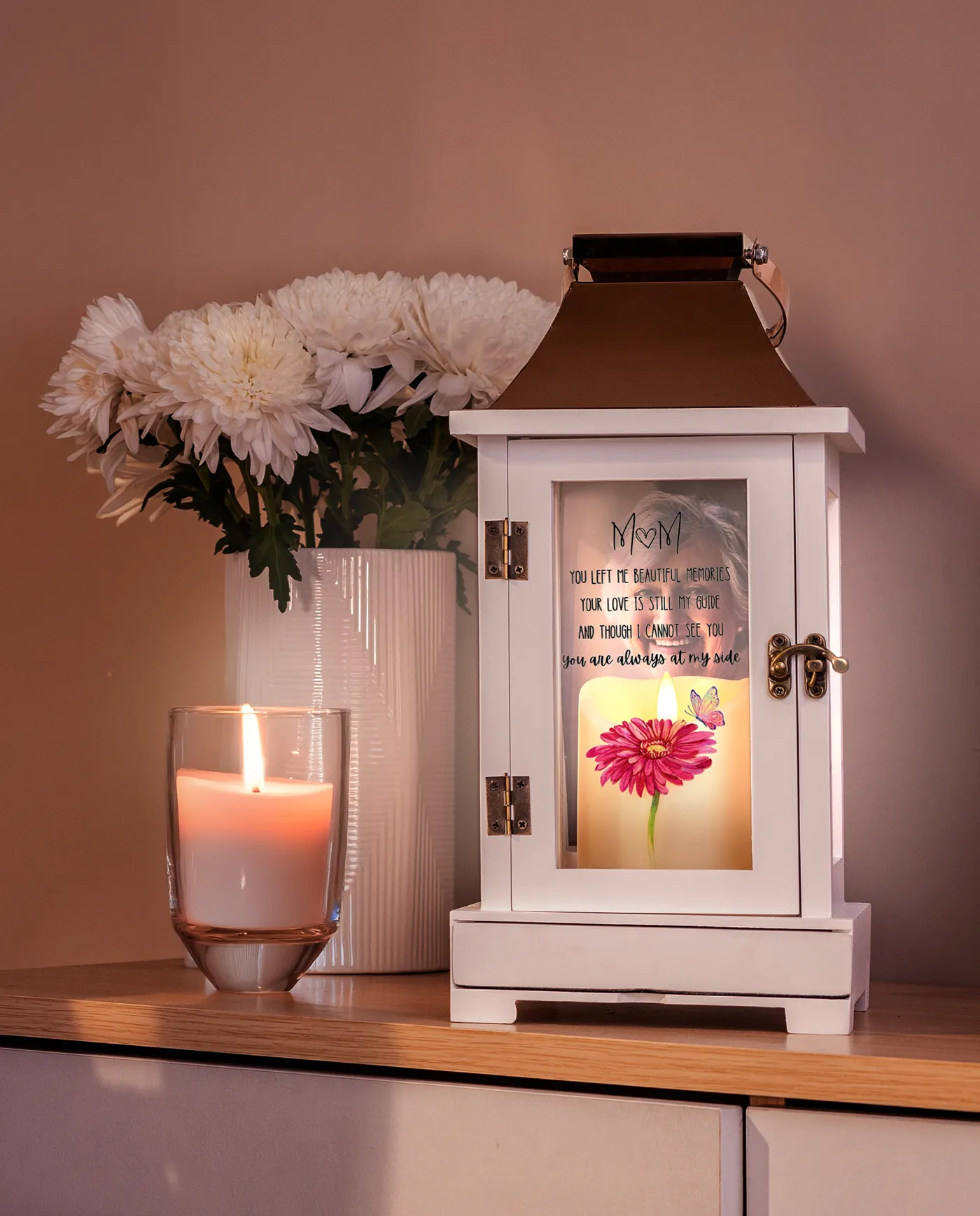
Keep the card the same length; the gift does not need explaining. Every STILLWIND memorial lantern arrives gift-boxed with a sympathy card, so you can send one straight to the family with your message. It holds a 4×6 photograph of the person who died behind the glass, has a drawer for small keepsakes, and a flameless candle that lights at the same time every evening. Each comes with the free Still With Me Starter Book, where the family can write down the stories you mention in your card.
Questions
What is a short message for a sympathy card?
“I’m so sorry about [their name]. Thinking of you and your family.” Using the person’s name and keeping it to a sentence or two is better than a long message.
Should I write a sympathy card if I didn’t know the person who died?
Yes. Write to the person you know: say you are sorry, that you know how much they meant to them, and that you are thinking of them.
Is it too late to send a sympathy card?
No. A card sent weeks or months later is often more welcome than one in the first days, when the family is overwhelmed. Say simply that you have been thinking of them.
What should you not write in a sympathy card?
Avoid “everything happens for a reason”, “I know how you feel”, questions about how they died, and vague offers of help. Name one specific thing you will do instead.
Should I mention a gift or donation in the card?
If you gave to a cause the family named, say so, so they know the gift came from you. If you are sending a keepsake, it does not need a long explanation.